Freon Recharge in Phoenix, Arizona
Freon recharge in Phoenix is rarely as simple as topping off the charge and calling it done, refrigerant doesn't get used up like gasoline, so if your system is low, it leaked out somewhere, and a recharge without finding that leak is usually a short-term fix.
Tell us what your AC is doing and get matched with a background-checked Phoenix HVAC pro who tests before he charges, not after.
No app to download. Works right in your browser.
ShowUp Guarantee, no-show means no pay.
Most R-410A recharges: $250–$700, done same-day.
Why “Just Add Freon” Isn't the Whole Fix
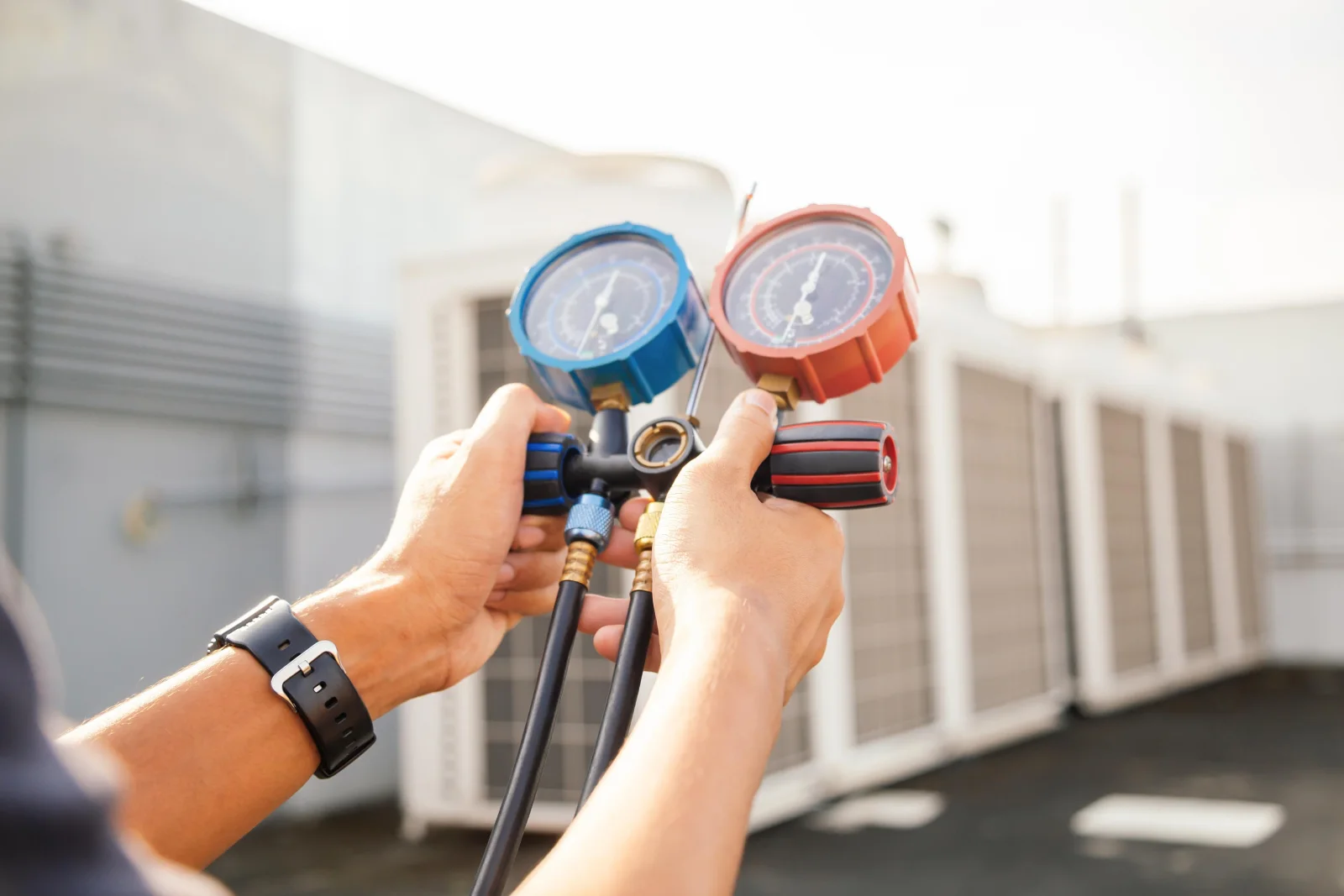
Refrigerant circulates in a sealed loop, it doesn't get consumed the way a car burns gasoline. If your system tests low, that refrigerant left the loop somewhere, and simply topping it back off without finding the leak means you're likely paying for the same recharge again in six months to a year.
What's actually in that loop varies by how old the system is. Central Phoenix homes in older neighborhoods like Encanto-Palmcroft, Willo, and Coronado that still run their original or first-replacement condenser often still use R-22, while newer construction out toward Verrado, Estrella, and Desert Ridge runs R-410A almost exclusively, and the two refrigerants are priced worlds apart right now.
ShowUp Promise matches you with a vetted, licensed, insured, background-checked HVAC pro who checks for a leak before recommending a recharge, not after, and if they don't show up, the ShowUp Guarantee means you don't pay.
Signs Your Phoenix AC Needs a Freon Recharge
A pro weighs several signals together, not just one:
- The system cools fine overnight but can’t keep up once afternoon highs push past 105°F
- Ice forming on the outdoor copper refrigerant line or the indoor coil, even in summer
- A hissing or bubbling sound near the outdoor unit or the refrigerant lines
- Vents blowing air that’s barely cooler than room temperature
- The system runs almost constantly and still never quite hits the thermostat setting
- Electric bills climbing even though nothing about how the house is used has changed
Ice or a hissing sound is not a wait-and-see situation, running a low-refrigerant compressor dry can burn it out, turning a few-hundred-dollar recharge into a full system replacement. Shut the system off and call before that happens.
Finding the Leak Before Adding Refrigerant
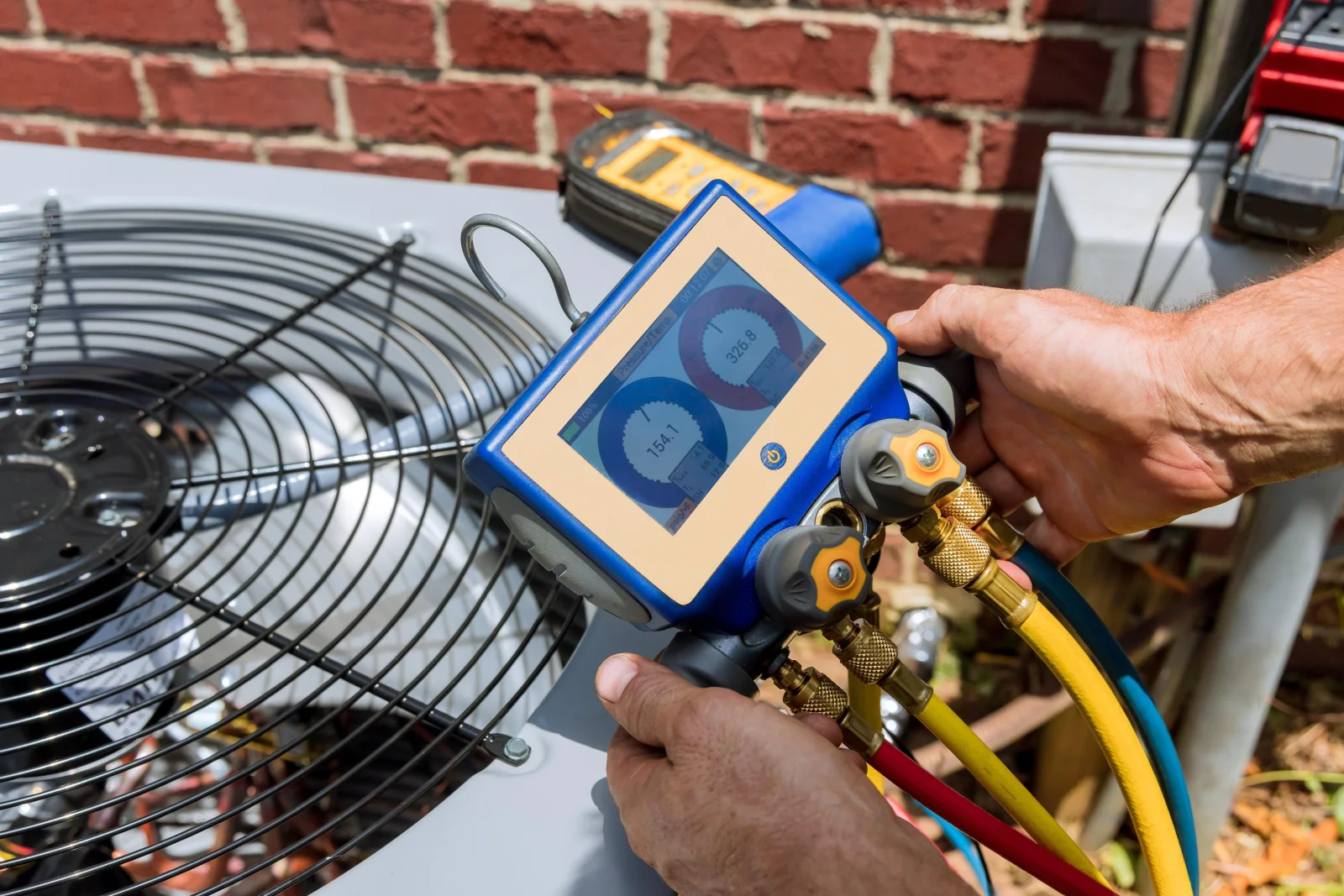
Your pro starts by connecting manifold gauges to read the system's actual pressures against what that refrigerant should read at the current outdoor temperature, then narrows down a suspected leak with an electronic leak detector or a dye test for slow, hard-to-catch leaks.
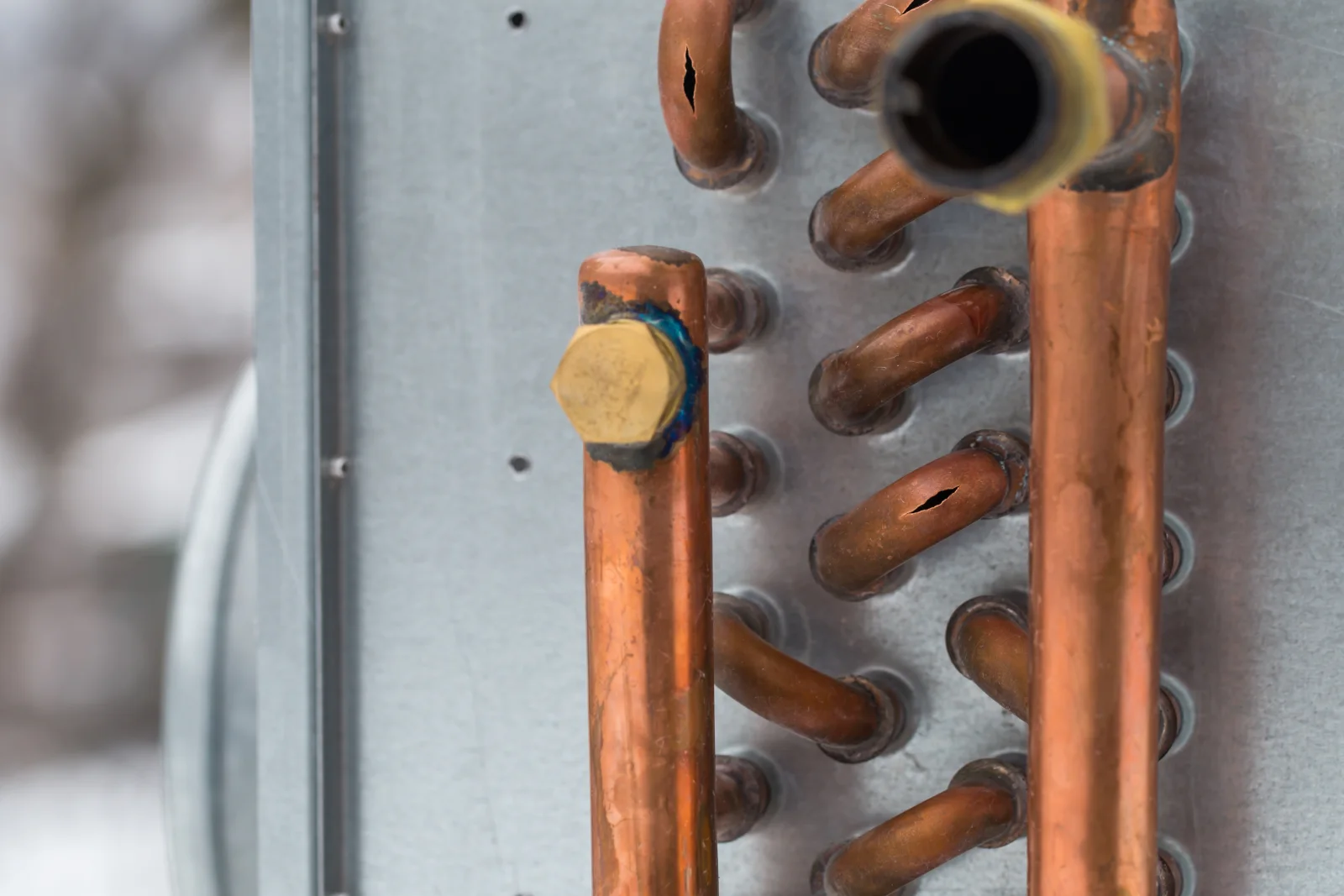
Systems across South Mountain, Ahwatukee, and Laveen run close to year-round here, and the evaporator coil is the single most common failure point on a system that has logged that many operating hours, a pinhole leak in the coil fins is a far more frequent find than a bad valve or a damaged line set.
Once the leak is found and sealed or the failed part is replaced, the system gets charged to the exact weight the manufacturer specifies, not eyeballed off a gauge reading, so it runs at the efficiency it was designed for instead of limping along undercharged.
R-22 vs. R-410A, What Your System Actually Takes
Production and import of new R-22 ended in 2020, so every pound charged into an older system now comes from recycled or reclaimed stock, pricing has climbed from around $30 a pound a decade ago to $100–$250 a pound today, and it keeps climbing as supply shrinks.
R-410A, standard on anything installed since roughly 2010, runs far cheaper at $50–$100 a pound installed, which is why a 2-to-4-pound top-off typically lands at $250–$700 total versus $400–$1,000+ for the same amount of R-22.
If your system is an older R-22 unit and the leak search turns up a failed compressor or a badly corroded coil, a straight recharge stops making financial sense, at that point putting the money toward a full AC replacement on R-410A is usually the better long-term call, and your pro will say so plainly instead of recharging a system that's already on its way out.
Certification, Permits, and What a Recharge Costs
Federal law requires an EPA Section 608 certification to purchase or handle refrigerant, which is why a licensed HVAC pro, not a store-bought can, is the legal and safe way to recharge a central home AC system. A straight recharge is a service call, not a permitted alteration, so it doesn't go through the City of Phoenix residential mechanical permit process the way a full system replacement does.
A typical R-410A top-off of 2 to 4 pounds runs $250 to $700 installed. The same amount of R-22 in an older system runs $400 to $1,000+ given current scarcity pricing. A standalone leak search, separate from the recharge itself, typically adds $200 to $550 depending on how hard the leak is to track down.
Homeowners outside Phoenix city limits, Scottsdale, Tempe, Mesa, Chandler, Gilbert, or Glendale, fall under that city's own mechanical code instead, but the recharge-versus- replace math stays the same everywhere in the Valley. With ShowUp Promise you see an itemized price after the leak check, before any refrigerant is purchased or added.
Serving Phoenix and the Whole Valley
ShowUp Promise matches homeowners with HVAC pros across Phoenix and the wider Valley, including neighborhoods along the I-17 and Loop 101 corridors, Arcadia, Ahwatukee, Deer Valley, Paradise Valley, Scottsdale, Tempe, Mesa, Chandler, and Gilbert. Wherever your home is, there is likely a vetted pro nearby who diagnoses refrigerant issues on Phoenix systems every summer.
Not sure a recharge is what you need, or dealing with a different part of the same system? The same network covers furnace repair, furnace replacement, new furnace installation, heat pump installation, mini split installation, pool heater installation, dehumidifier installation, duct sealing, duct cleaning, ductless AC replacement, heat exchanger repair, evaporative cooler repair, mobile home AC repair, thermostat repair, boiler repair, and general HVAC service. You can also browse all of our trusted contractors in Phoenix in one place.
The ShowUp Guarantee
Every HVAC pro in the ShowUp Promise network is vetted, licensed, insured, and background-checked before they ever reach your door. You approve the price before work starts, and if a pro does not show, you do not pay, the system automatically works to reassign your job to the next available verified pro so your AC never gets left blowing warm air.
Freon Recharge Phoenix FAQ
How Do I Know If My AC Needs a Freon Recharge or Something Else?
How Much Does a Freon Recharge Cost in Phoenix?
Can I Recharge My Own AC With a Store-Bought Refrigerant Kit?
Is R-22 Freon Still Available for Older Phoenix Systems?
Do I Need a Permit for a Freon Recharge in Phoenix?
Why Does My AC Cool Fine at Night But Struggle in the Afternoon Heat?
Get Your Phoenix AC Recharged
Match with a vetted, licensed, insured Phoenix HVAC pro who checks for a leak first and gives you an upfront price before adding a drop of refrigerant.