Dehumidifier Installation in Phoenix
Dehumidifier installation in Phoenix is not the contradiction it sounds like, once the North American Monsoon rolls in every summer, or a swamp cooler and poor bathroom ventilation are adding moisture year-round, a whole-home system tied into your ductwork is the fix a lot of Valley homeowners never knew they needed.
Tell us about your home and get connected with a background-checked Phoenix HVAC pro who can size and install a whole-home dehumidifier built for your ductwork and your household.
No app to download. Works right in your browser.
ShowUp Guarantee, no-show means no pay.
Why a Desert City Needs Dehumidifiers
Phoenix earns its dry reputation honestly, indoor humidity often sits in the single digits to low teens most of the year. But the North American Monsoon changes that story every summer. Roughly mid-June through September, a single storm can push outdoor humidity from around 10 to 15 percent into the 50 to 70 percent range within hours, and that moisture works its way indoors long before the storm clears.
A standard air conditioner is built to cool the air, not aggressively dry it, so during a stretch of monsoon weeks your AC can keep the thermostat satisfied while the house still feels sticky, and closed rooms start to smell musty. Homes running an evaporative "swamp" cooler add moisture on purpose to cool the air, which works great in dry months but becomes counterproductive the moment outdoor humidity climbs, many Phoenix homeowners switch off their swamp cooler for exactly this reason once monsoon season hits.
Poor bathroom or laundry room ventilation, a tightly sealed newer build that traps moisture indoors, or a home near a pool can all keep humidity elevated well outside monsoon weeks too. ShowUp Promise matches you with a vetted, licensed, insured, background-checked HVAC pro who sizes and installs a whole-home dehumidifier for the humidity your specific house actually deals with, and if they do not show, the ShowUp Guarantee means you do not pay.
Whole-Home Ducted vs. a Portable Unit
A portable dehumidifier only treats the single room it sits in, needs its tank emptied by hand unless you run a drain hose, and rarely keeps pace with a whole Phoenix-sized home during a heavy monsoon stretch. A whole-home ducted installation ties directly into your existing HVAC ductwork so it works quietly out of sight and treats every room the system serves. A typical whole-home installation covers:
- Tying the unit into your existing return and supply ductwork, usually near the air handler
- A dedicated condensate drain line to carry collected moisture away, similar to your AC's drain
- Electrical work, including a dedicated circuit or GFCI outlet where the install calls for one
- Programming the humidistat control to your household's target humidity range
- Confirming duct static pressure and airflow so the added unit does not choke your existing system
- A final test run and walkthrough of filter changes and drain-line maintenance
How Dehumidifier Installation Actually Works
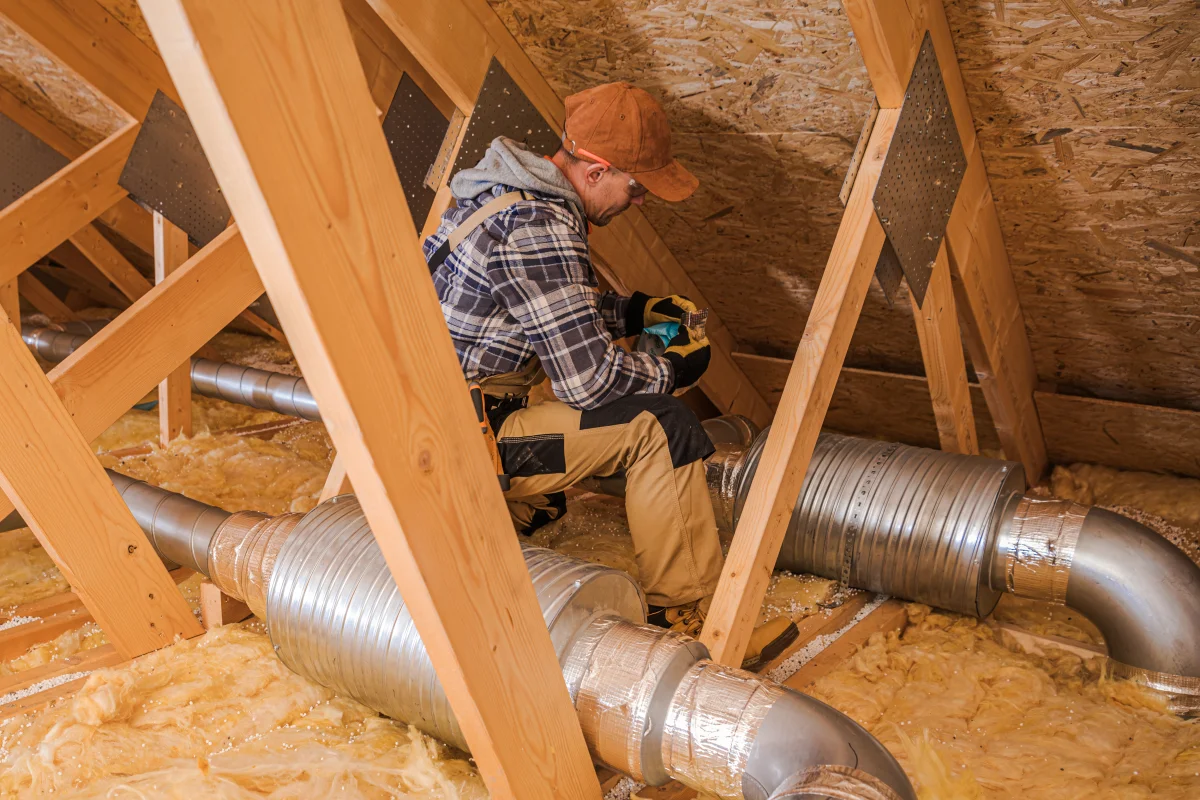
Installation starts in your attic or utility space near the air handler, where your HVAC pro ties the dehumidifier directly into the existing return and supply ductwork rather than adding a separate standalone appliance to every room. Because the unit shares ductwork with your current system, the dried air gets distributed through the same vents already cooling your home.
Your pro runs a dedicated condensate drain line so the moisture the unit pulls out of the air has somewhere to go, the same way your AC's evaporator coil already drains. Depending on your electrical panel and the unit's power draw, the install may also call for a new dedicated circuit or a GFCI outlet near the unit, your HVAC pro confirms this before work begins, not after.
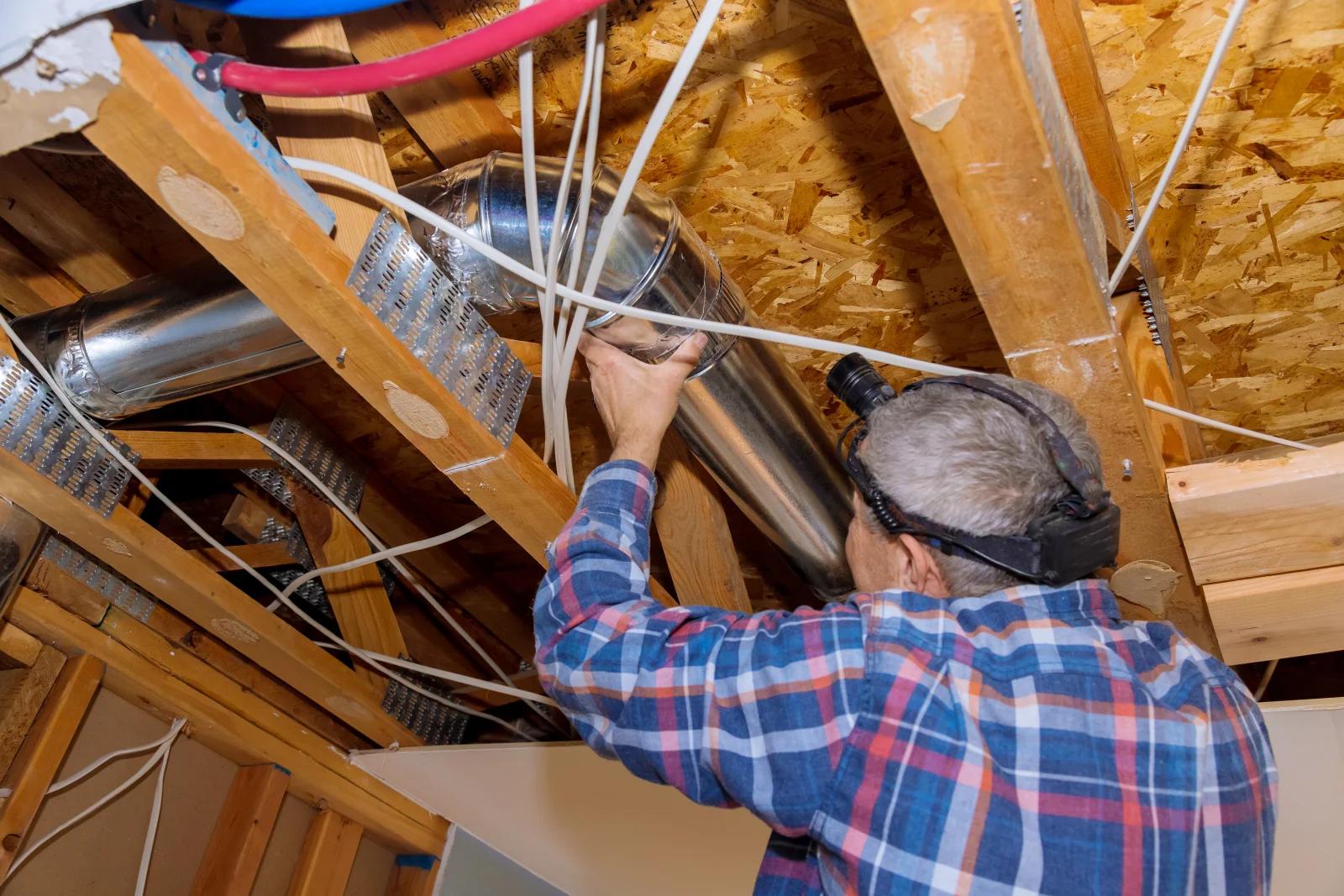
Once everything is connected and sealed, the humidistat control gets programmed to your household's target humidity range, and static pressure across your ductwork gets checked to make sure the added unit is not choking airflow to the rest of your system. A straightforward installation on accessible ductwork typically wraps up in a single visit.
Choosing the Right Size for Your Home
Whole-home units are sized in pints of moisture removed per day, matched to your square footage and how much moisture your home actually deals with, not floor area alone. As a rough guideline, a moderately humid home up to about 2,500 square feet often lands around 70 pints per day, while larger homes or homes with heavier moisture sources typically call for 90 to 120 pints per day.
Heavier moisture sources push sizing up regardless of square footage. A home running a swamp cooler during shoulder months, a poorly vented bathroom or laundry room, a house near a pool, or a tightly sealed newer build that traps humidity indoors all add load a generic size chart will not capture. Ceiling height and how open your floor plan is also factor into the total air volume being conditioned.
A pro matched through ShowUp Promise will measure your actual square footage, walk your home for moisture sources, and size a unit to your real numbers instead of a one-size chart, the difference between a system that keeps up during a monsoon week and one that runs constantly and still falls behind.
What Dehumidifier Installation Costs in Phoenix
Most Phoenix homeowners pay somewhere between $1,700 and $3,500 for a fully installed whole-home ducted system, with equipment typically running $1,100 to $2,500 or more depending on pint capacity and features, and labor adding another $500 to $1,500 depending on ductwork access and electrical needs.
A straightforward tie-in to existing, accessible ductwork near the air handler installs faster and costs less than a job requiring new ductwork, a dedicated electrical circuit, or a condensate pump for a tricky drain path. Pint capacity is the single biggest driver of equipment cost, a larger home or heavier moisture load pushes you toward a higher-capacity unit and a bigger number on the equipment line.
With ShowUp Promise you see an upfront, itemized price and approve it before your pro starts any ductwork or electrical work, so there are no surprise add-ons once the unit is already tied into your system.

What Balanced Humidity Actually Gets You
Keeping indoor humidity in a healthy range helps prevent the mold and mildew growth that thrives once a home's evaporator coil, closets, or bathrooms sit damp for even a day or two during monsoon season. It also cuts down on that musty smell a lot of Phoenix homeowners notice in closed-up rooms right after a storm rolls through.
Beyond air quality, controlling humidity protects things a swamp cooler or a humid monsoon week can quietly damage, wood furniture and flooring that swell and warp, musical instruments that go out of tune, and electronics that are more sensitive to moisture than most people realize. Lower humidity also means fewer dust mites, since they thrive in the same damp conditions mold does.
And there is a comfort difference you feel immediately: a home at 30 to 50 percent relative humidity simply feels cooler and more comfortable at the same thermostat setting, which means less strain on your AC trying to compensate for sticky, humid air during the hottest months of the year.
Serving Phoenix and the Whole Valley
ShowUp Promise matches homeowners with HVAC pros across Phoenix and the wider Valley, including Mesa, Scottsdale, Paradise Valley, Chandler, Tempe, Gilbert, Glendale, Peoria, Surprise, and Goodyear. Wherever your home is, there is likely a vetted pro nearby ready to size and install a system built for your ductwork and your household's humidity.
Still running a evaporative cooler repair that is adding to your indoor humidity, or wondering whether duct sealing would help your new dehumidifier work more efficiently? Our network also handles other HVAC needs Phoenix homeowners run into, like mobile home AC repair, ductless AC replacement, furnace repair, thermostat repair, and heat exchanger repair. You can also browse all of our trusted contractors in Phoenix in one place.
The ShowUp Guarantee
Every HVAC pro in the ShowUp Promise network is vetted, licensed, insured, and background-checked before they ever reach your door. You approve the price before work starts, and if a pro does not show, you do not pay, the system reassigns your job to the next available verified pro instead.
Sustained indoor humidity above roughly 50 percent creates conditions where mold can begin growing within one to two days, according to the EPA's guidance on mold and health. For sizing and efficiency guidance on dehumidification equipment, the ENERGY STAR dehumidifier program is a useful independent reference, a properly sized, professionally installed system is the most reliable way to keep a Phoenix home in the healthy 30 to 50 percent range year-round.
Dehumidifier Installation Phoenix FAQ
Phoenix Is a Desert, Why Would I Need a Dehumidifier?
Whole-Home Ducted vs. Portable, Which Should I Get?
What Size Dehumidifier Does My Phoenix Home Need?
How Much Does Dehumidifier Installation Cost in Phoenix?
Where Does a Whole-Home Dehumidifier Get Installed?
How Much Maintenance Does a Whole-Home Dehumidifier Need?
Get a Dehumidifier Installed at Your Phoenix Home
Tell us about your home, then match with a vetted, licensed, insured Phoenix HVAC pro who sizes the system right, ties it into your ductwork correctly, and shows up when they say they will.