Wood Floor Installation in Phoenix, Arizona
Wood floor installation in Phoenix means building for a climate no other trade has to plan around , indoor humidity that can swing from around 10 percent in April to 60 or 70 percent during a July monsoon storm, and nearly every home sitting on a bare concrete slab instead of a wood subfloor.
ShowUp Promise matches you with a vetted, licensed, insured flooring installer who plans for both before the first plank ever goes down.
No app to download. Works right in your browser.
ShowUp Guarantee, no-show means no pay.
Most installs run 1-3 days, itemized pricing upfront.
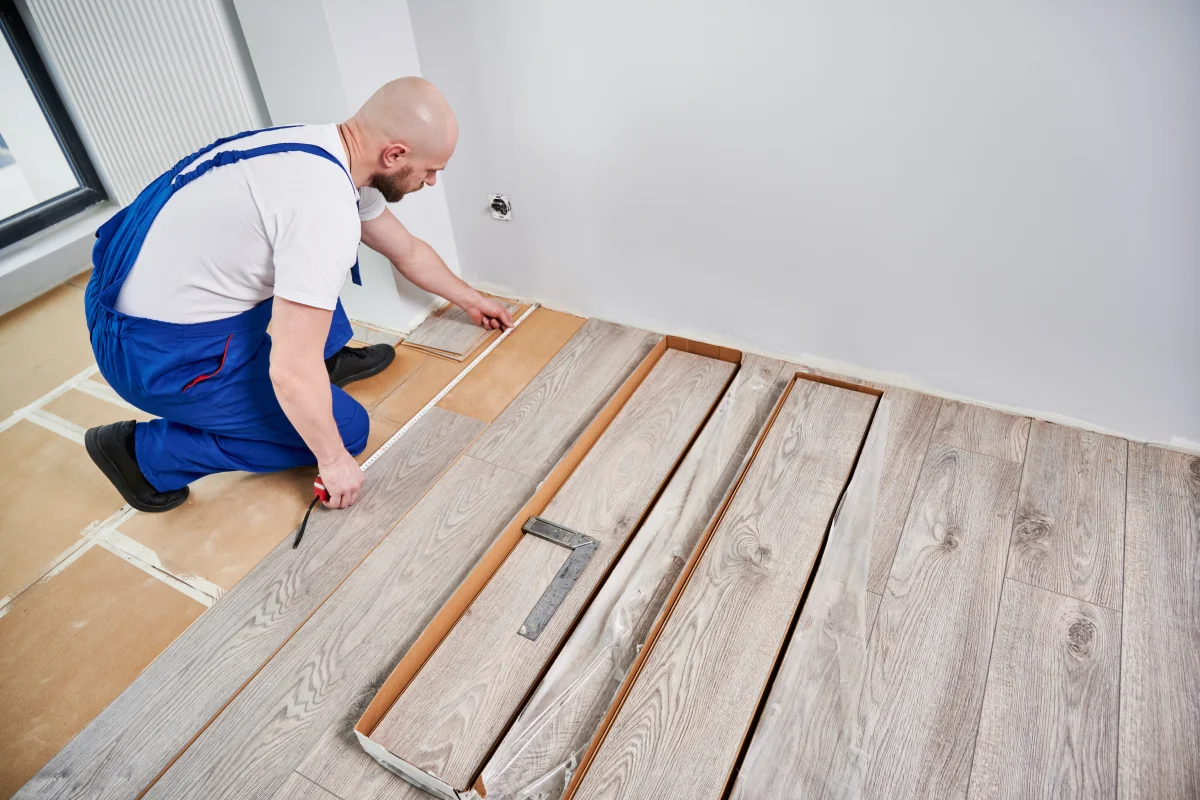
Why Phoenix Homeowners Install Wood Floors
Wood floor installation in Phoenix usually gets called in for one of two reasons: a homeowner is finally replacing carpet or builder-grade vinyl that has worn out, stained, or trapped allergens for years, or a leak, monsoon flooding, or an old AC condensation issue has left carpet or padding wet long enough that mold risk makes replacement the safer call , the EPA notes mold can start growing in wet materials within 24 to 48 hours.
Either way, the job has to account for something most other climates never deal with, Phoenix's wide swing between bone-dry spring air and a humid monsoon summer, and the fact that almost every home here sits on a poured concrete slab instead of a raised wood subfloor.
ShowUp Promise matches you with a vetted, licensed, insured, background-checked flooring installer who designs around your subfloor and your climate, and if they do not show up, the ShowUp Guarantee means you do not pay.
When Phoenix Homeowners Call a Wood Flooring Installer
Most wood flooring jobs fall into a handful of common situations:
- Replacing water- or mold-damaged carpet after a leak, AC condensation issue, or monsoon flooding
- Moving into a new house and upgrading from builder-grade carpet or sheet vinyl
- Refinishing worn, scratched, or sun-faded existing hardwood instead of a full replacement
- Swapping outdated tile or laminate in a kitchen, hallway, or living room for real or engineered wood
- Extending existing hardwood into a room addition or remodel so the floor matches throughout
- Installing engineered wood over a concrete slab in a single-level Phoenix home
- Upgrading a rental property or flip ahead of listing to raise its resale or rental value
Why Phoenix's Dry Climate Changes How Wood Floors Are Installed
Indoor relative humidity in the Valley can drop to 10 to 20 percent during the dry months, which is enough to shrink solid wood boards and open gaps between them, then swing up to 60 or 70 percent once monsoon season arrives between June and September, which can cause the opposite problem, cupping, where board edges rise higher than the center. Manufacturers generally design wood flooring for 35 to 55 percent indoor humidity, so most installers recommend a humidifier to hold that range through Phoenix's driest stretches.
Older homes in neighborhoods like Encanto-Palmcroft and Arcadia sometimes still have original hardwood from decades ago that has never been refinished, while newer construction further out toward Ahwatukee and along the I-17 corridor is almost always built on a poured concrete slab , which means a moisture barrier gets glued down before any plywood or flooring goes in.
An installer who works Phoenix homes along Camelback Road, Indian School Road, and the Loop 101 corridor every week knows how much acclimation time a shipment of boards needs before it is safe to install, and how that changes between February and August.
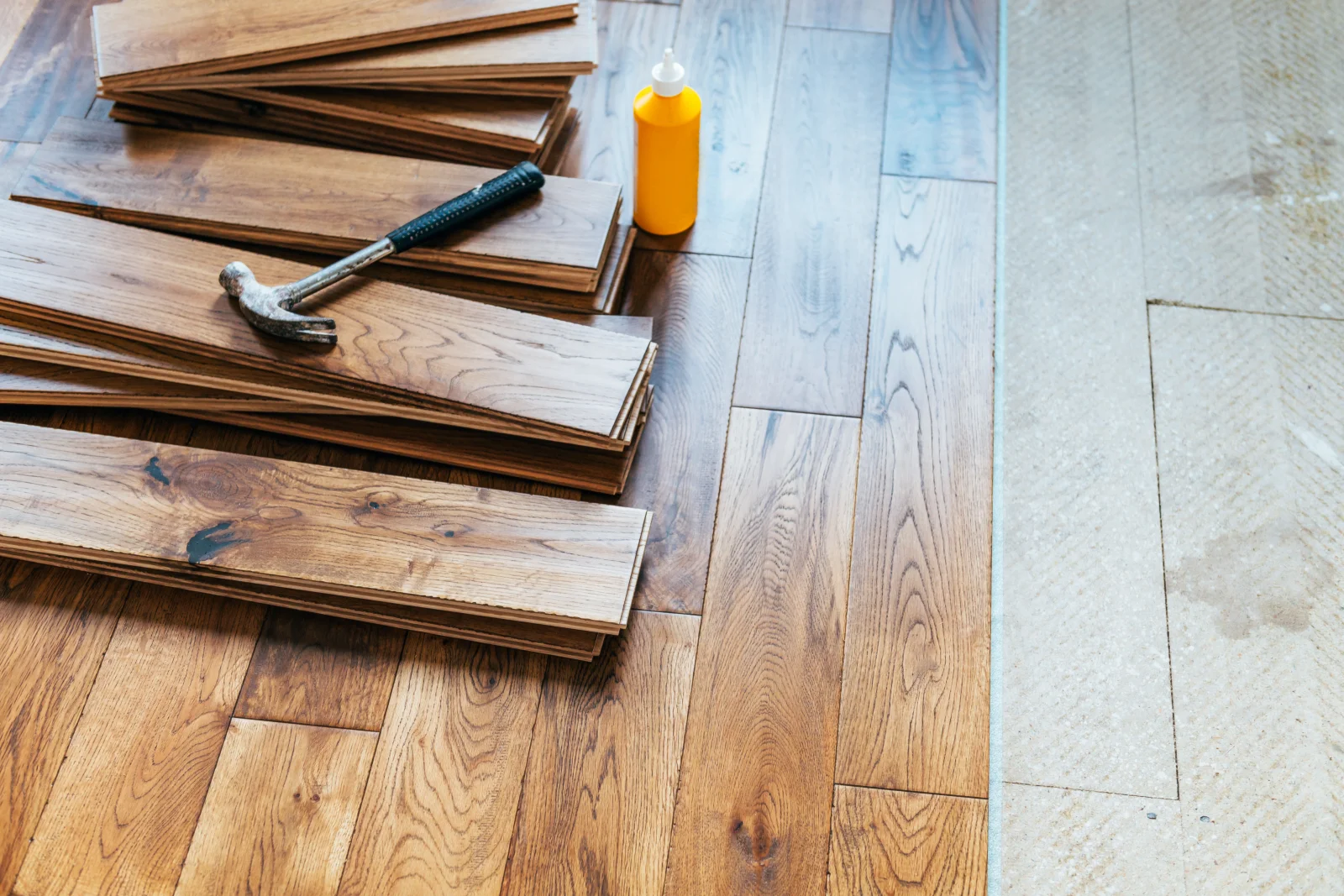
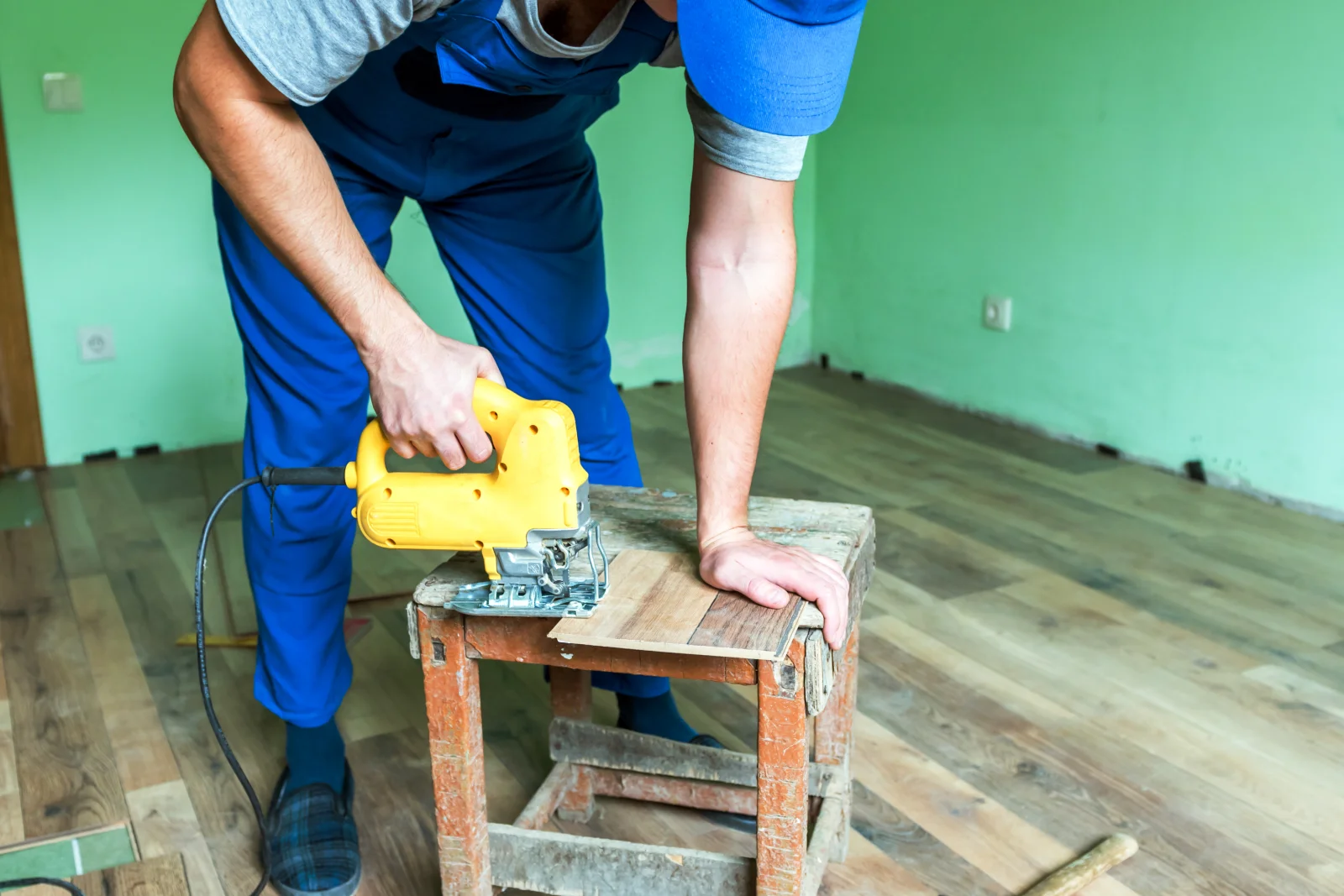
Engineered vs. Solid Hardwood, Which Holds Up Better in the Desert
Engineered hardwood is the more common recommendation for Phoenix because its plywood, cross-layered core resists shrinking and gapping better than solid wood through the Valley's wide humidity swings, and it can go directly over a concrete slab with the right moisture barrier.
Solid hardwood still works well when it is properly acclimated and installed by someone who understands slab-foundation prep, oak is the most requested species here for its stability and wide range of stain options, with maple for a clean uniform look and hickory for extra hardness in high-traffic rooms.
Pre-finished boards arrive sanded and sealed, so there is no sanding dust and you can walk on the floor the same day. Site-finished floors take longer and create dust for a few days, but let you choose a fully custom stain color matched to your space.
What Wood Floor Installation Costs in Phoenix
Material typically runs $3 to $14 per square foot depending on species and whether you choose engineered or solid wood, plus $3 to $8 per square foot for labor. A full single-story Phoenix home usually lands between $2,634 and $7,217, averaging around $4,830.
Pre-finished engineered wood is the faster path, installers typically cover about 100 square feet per half day, and it is walkable the same day. Site-finished solid hardwood runs closer to 1 to 1.5 days per 100 square feet once sanding, staining, and sealing are factored in.
With ShowUp Promise you see an itemized, upfront price after your installer measures the room and checks your subfloor, so there are no surprise add-ons once the boards arrive.
Serving Phoenix and the Whole Valley
ShowUp Promise matches homeowners with wood flooring installers across Phoenix and the wider Valley, including Arcadia, Ahwatukee, Biltmore, Encanto-Palmcroft, Roosevelt Row, Scottsdale, Tempe, Mesa, Chandler, and Gilbert. Wherever your home is, there is likely a vetted pro nearby who installs wood flooring for Phoenix's slab foundations and humidity swings every day.
Working on more than just your floors? The same network covers cabinet refinishing, pergola installation, alumawood pergola installation, deck building, custom millwork, garage shelving, custom furniture building, antique furniture repair, framing contractors, and custom bookshelves. You can also browse all of our trusted contractors in Phoenix in one place.
The ShowUp Guarantee
Every wood flooring installer in the ShowUp Promise network is vetted, licensed, insured, and background-checked before they ever reach your door. You approve the price before work starts, and if a pro does not show, you do not pay, the system automatically works to reassign your job to the next available verified pro so your project is never left half-finished.
Wood Floor Installation Phoenix FAQ
How Much Does Wood Floor Installation Cost in Phoenix?
What's the Best Wood Flooring for Phoenix's Dry Climate?
Will My Wood Floors Warp or Gap in Phoenix Heat?
How Long Does Wood Floor Installation Take?
Pre-Finished or Site-Finished, Which Should I Choose?
Do I Need a Moisture Barrier Over My Concrete Slab?
Get Your Phoenix Wood Floors Installed
Match with a vetted, licensed, insured Phoenix wood flooring installer who builds for the desert climate and shows up when they say they will.