Microwave Repair in Phoenix, Arizona
Microwave repair in Phoenix, AZ is usually a same-visit fix, a door switch, a fuse, or a failed high-voltage part, handled safely by someone trained to work around the capacitor inside.
Tell us what your microwave is doing and get matched with a vetted, background-checked Phoenix appliance technician.
No app to download. Works right in your browser.
ShowUp Guarantee, no-show means no pay.
Most microwave repairs in Phoenix run $80–$400 depending on the part.
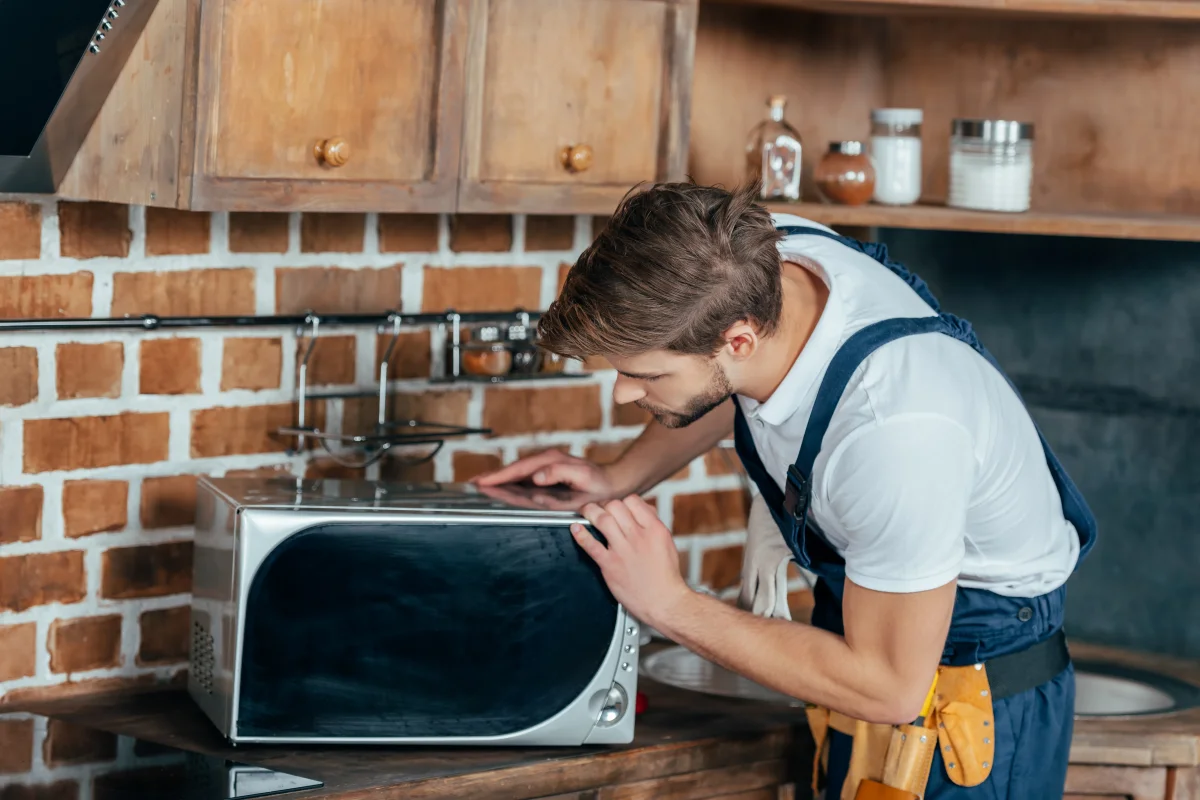
A Dead Microwave Doesn't Always Mean a New One
A microwave that won't heat, sparks when it runs, or just goes dark is one of the most common appliance calls in Phoenix kitchens, and one of the most misunderstood. Most people assume the whole unit is shot, but a door switch, a blown fuse, or a worn turntable motor are all inexpensive, same-visit fixes.
The part that scares people off from DIY, and rightly so, is the high-voltage capacitor behind the control panel. It can hold a dangerous charge even after the microwave is unplugged, which is exactly why this repair calls for someone trained on it specifically.
ShowUp Promise matches you with a licensed, insured, background-checked Phoenix appliance technician who diagnoses the actual problem first, quotes it before touching anything, and tells you plainly if replacement is the smarter call.
Microwave Problems Phoenix Techs Fix Every Week
The most common calls we route to appliance pros across the Valley:
- Microwave turns on but doesn’t heat food (capacitor, diode, or magnetron)
- Won’t power on at all, or the display is dead
- Sparking, arcing, or popping sounds inside the cavity
- Door won’t latch, or the microwave stops mid-cycle
- Turntable doesn’t spin, or grinds and stalls
- Buttons unresponsive or the keypad has stopped registering presses
- Built-in or over-the-range units that need reinstallation after a repair
Sparking, Popping, or Sudden Silence? Stop and Call
Sparking almost always means something metallic is arcing inside the cavity, or the waveguide cover, the small panel that shields the magnetron, has worn through. Keep using the microwave after that starts and you risk turning a $20 part into a full magnetron replacement. The fix is usually fast once a technician can actually see inside.
A microwave that runs but doesn't heat is a different signal entirely: the display, light, and turntable working normally usually means the problem is isolated to the high-voltage circuit, a failed capacitor or diode, not the control board. That's good news, because it's one of the more affordable repairs once diagnosed correctly.
Whether you're in a high-rise kitchen downtown near Roosevelt Row, a ranch-style house off Camelback Rd in Arcadia, or a newer build out by Desert Ridge and Loop 101, the appliance itself doesn't care about the neighborhood, but knowing which part failed does, and that's what a real diagnosis is for.
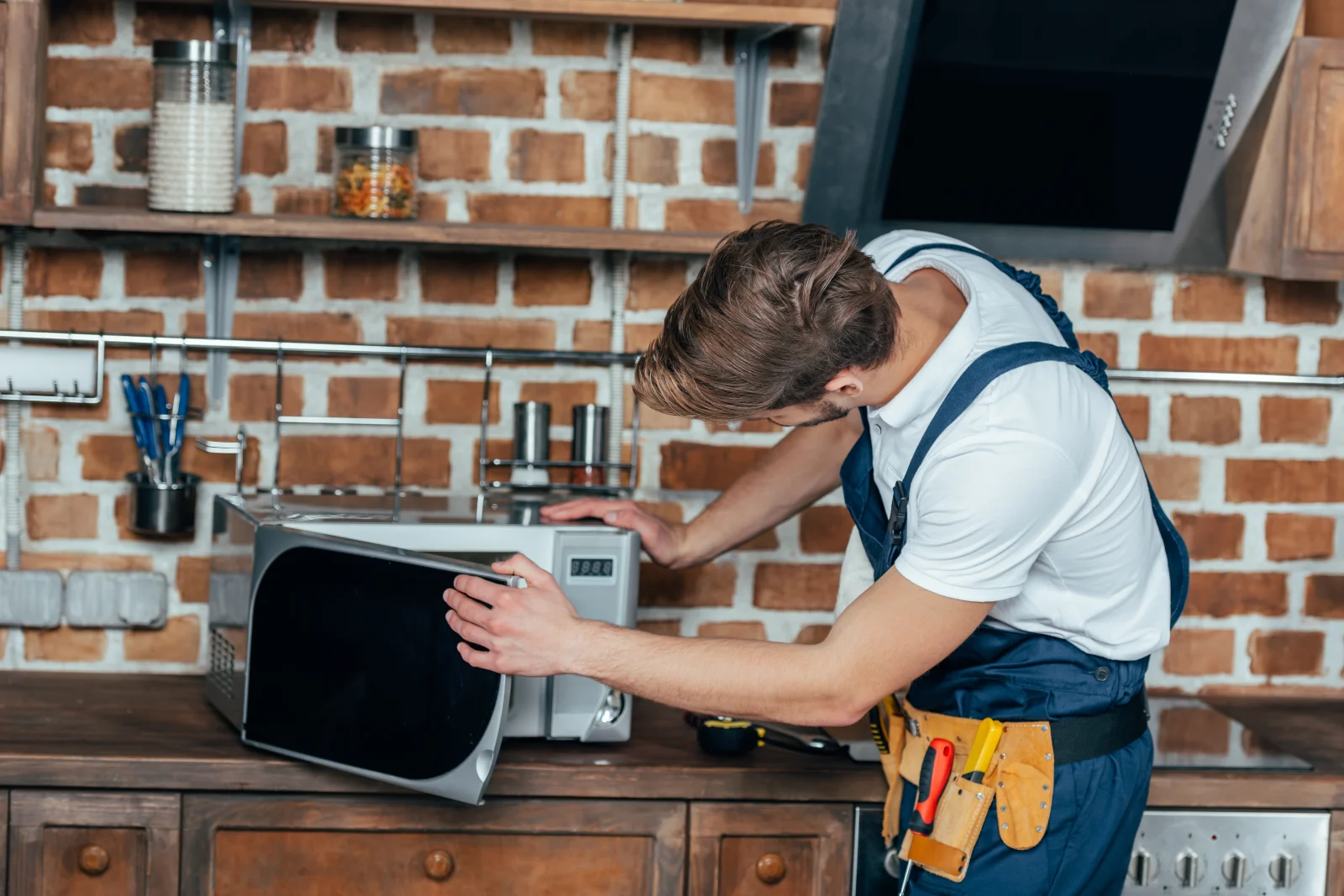
How ShowUp Promise Connects You With a Technician
Describe what your microwave is doing, dead display, sparking, no heat, a door that won't latch, and we match you with an available, vetted appliance technician from our network of trusted contractors in Phoenix.
You see and approve an upfront quote before any part is ordered, pay securely in-app, and track your technician's arrival. Because every pro in the network is already licensed, insured, and background-checked, you skip the part where a stranger opens a panel holding a live electrical charge in your kitchen with no vetting at all.
No app download, no obligation to book the first quote, just a faster, safer path back to a working microwave.
The ShowUp Guarantee
Every appliance technician in the ShowUp Promise network is vetted, licensed, insured, and background-checked before they ever touch your microwave. You approve the price before work starts, and if a pro does not show, you do not pay, the system automatically works to reassign your job to the next available verified pro so a broken microwave never turns into a wasted week of takeout.
Repair or Replace? What Actually Makes Sense
A good rule of thumb: repair makes sense when the cost is under roughly half the price of a new unit and the microwave is under about 7 years old. Door switches, fuses, turntable motors, and even a capacitor or diode swap almost always clear that bar.
Built-in and over-the-range models are usually worth repairing even when the part is pricier, since the installation cost of a replacement, cabinet cutout, venting, electrical , is far more than the appliance itself. A countertop unit nearing 8-10 years old with a failed magnetron is often the one case where buying new is the more practical move.
Either way, your technician tells you the honest number before any part is ordered, we would rather you replace a truly dead unit than pay to patch one that's not coming back reliably.
Signs It's Time to Call a Microwave Technician
Phoenix homeowners typically reach out when their microwave:
- Runs, lights up, and spins the turntable, but food never heats up
- Sparks, pops, or arcs when you run it
- Won’t turn on at all, even after checking the breaker and outlet
- Stops mid-cycle or the door won’t latch closed
- Has a burning smell or the interior paint looks scorched
- Needs to be reinstalled as a built-in or over-the-range unit after a repair
What Happens During a Repair Visit
- 1Diagnose. The technician tests the door switches, fuse, turntable motor, and, safely, after discharging it, the high-voltage capacitor to isolate the real problem.
- 2Quote. You see the exact part and labor cost before anything is ordered or replaced, whether that’s a $30 switch or a full magnetron.
- 3Repair. Most countertop and over-the-range fixes are completed the same visit; built-in units are reinstalled and tested in place.
- 4Test and confirm. The technician runs the microwave through a full heat cycle before leaving, so you know it actually works, not just powers on.
Why This Isn't a DIY Repair, and Where We Serve
The high-voltage capacitor inside a microwave can hold a dangerous charge long after the unit is unplugged. The U.S. Food and Drug Administration publishes safety guidance on microwave oven construction and radiation standards, which is part of why interior repairs are handled by a trained technician, not a weekend project.
ShowUp Promise matches homeowners with appliance technicians across Phoenix and the wider Valley, from downtown near Roosevelt Row to Arcadia and Camelback Rd, Ahwatukee, and newer communities out by Desert Ridge and Loop 101, plus Mesa, Scottsdale, Chandler, Tempe, Gilbert, Glendale, Peoria, Surprise, and Goodyear.
Once your microwave is fixed, the same network covers the rest of the kitchen, like refrigerator repair in Phoenix, washing machine repair in Phoenix, wall oven installation in Phoenix, appliance repair in North Phoenix, ice machine repair in Phoenix, garbage disposal repair in Phoenix, wine cooler repair in Phoenix, walk-in cooler repair in Phoenix, and espresso machine repair in Phoenix. You can also browse all of our trusted contractors in Phoenix in one place.
Microwave Repair Phoenix AZ FAQ
How Much Does Microwave Repair Cost in Phoenix, AZ?
Is It Worth Repairing My Microwave or Should I Just Replace It?
Why Is My Microwave Sparking or Making Popping Sounds?
My Microwave Turns On But Doesn’t Heat, What’s Wrong?
Can I Fix a Microwave Myself, or Is It Dangerous?
How Long Does a Microwave Repair Take?
My Over-the-Range Microwave Vent Fan Stopped Working, Is That Separate From the Heating Problem?
Get Your Phoenix Microwave Fixed
Match with a vetted, licensed, insured Phoenix appliance technician who diagnoses the real problem and quotes it before touching a thing.