Dryer Vent Installation in Phoenix, Arizona
Dryer vent installation in Phoenix usually comes up for one of three reasons: a new dryer with no safe path to the outside, an inspector or home buyer flagging an old foil or plastic accordion duct, or a garage or laundry-closet conversion that needs a run built from scratch.
Tell us about your setup and get matched with a background-checked Phoenix dryer vent pro who installs it to code the first time.
No app to download. Works right in your browser.
ShowUp Guarantee, no-show means no pay.
Most straight-run installs: same-day visit, itemized pricing upfront.

Why Phoenix Homeowners Need Professional Dryer Vent Installation
A dryer vent looks simple, a hose running from the back of the dryer to a hood outside, but the material, the length, and the number of bends all determine whether lint actually clears the line or slowly builds up inside the wall. Get any of those wrong and you end up with clothes that take two cycles to dry, a laundry room that runs hot, or a genuine fire risk sitting behind the drywall.
Most calls come from one of three places: a newly purchased dryer with no proper vent path yet, an old white plastic or foil accordion duct that a home inspector or new owner flagged as unsafe, or a garage bay or laundry closet conversion that needs a vent run built from nothing.
ShowUp Promise matches you with a vetted, licensed, insured, background-checked pro who installs the run to current code the first time, and if they do not show up, the ShowUp Guarantee means you do not pay.
When Phoenix Homeowners Need a New or Upgraded Vent
Dryer vent installation calls fall into a handful of common situations:
- A newly delivered dryer with no existing vent path, or one that does not line up with the new unit
- A home inspection or real estate sale flagging an old foil or plastic accordion duct as unsafe
- A garage bay, laundry closet, or casita conversion that needs a vent run built from scratch
- A vent run that is too long or has too many bends for the dryer to push air through effectively
- A crushed, kinked, or disconnected flexible line behind a dryer that got pushed back against the wall
- Switching from a wall termination to a roof termination (or the reverse) during a remodel
- Adding a booster fan to a long run that is not drying clothes in a normal cycle time
Why Phoenix Homes Need the Vent Run Done Right
Many Phoenix homes vent through stucco exterior walls or, in older neighborhoods like Coronado and the Willo Historic District near Central Avenue, through block or CMU construction, both of which need the penetration properly flashed and sealed, or monsoon-driven rain works its way in around the vent hood.
Summer heat is hard on cheap plastic vent hoods, which can warp or crack after a few years baking on a south-facing wall, so a pro installing your vent uses a metal hood rather than plastic. Newer builds out toward Desert Ridge and Verrado, and additions in Ahwatukee and Laveen, are where most of the from-scratch laundry conversions happen, since those layouts often put the laundry hookup on an interior wall with no short path outside.
A pro who installs vents across neighborhoods along Bell Road, Camelback Road, and the I-17 and Loop 101 corridors every week knows which termination style, wall or roof, actually fits your specific layout before they ever cut a hole.

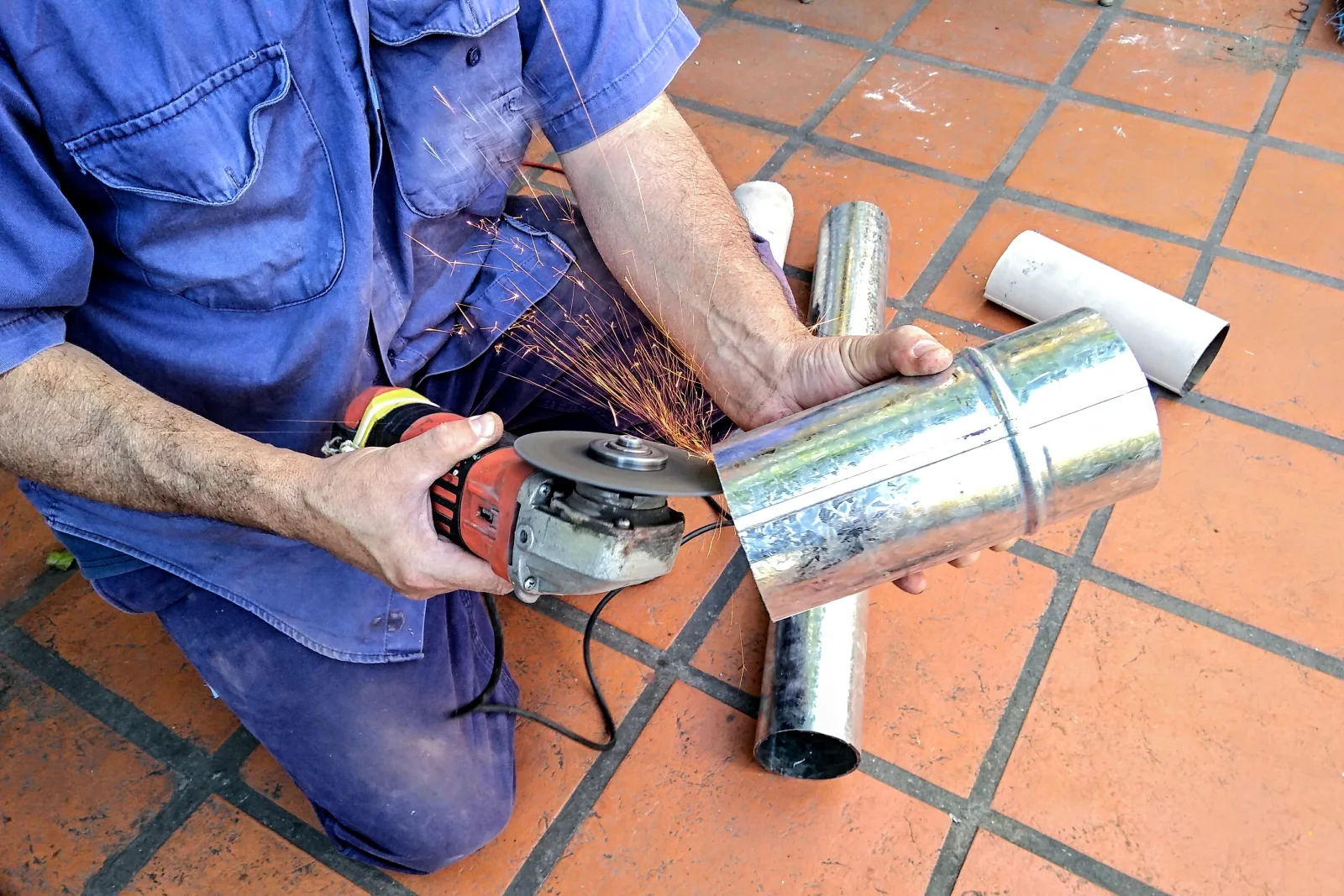
Rigid Metal Duct, Length Limits, and Getting It to Code
Code allows only a short listed flexible transition, up to 8 feet, between the dryer and the wall opening. Everything past that has to be smooth-wall rigid galvanized duct, cut and fitted to your specific run rather than left as a long coil of flex behind the machine.
The baseline max run is 25 feet of total equivalent length, with roughly 5 feet deducted for every 90-degree elbow and 2.5 feet for every 45-degree elbow, so a run with a couple of tight turns has far less usable straight duct than the raw 25-foot number suggests. Runs that genuinely exceed that limit need a listed inline booster fan sized to your dryer's output, not a generic add-on.
Your installer measures the actual path, counts the bends, and either fits it within code with rigid duct alone or specs a booster fan, and explains which one your home needs before cutting anything.
Why Vent Material and Length Are a Fire-Safety Issue
Foil and plastic accordion duct trap lint in their ridges far more than smooth rigid metal, and an overly long or heavily bent run slows airflow enough that lint settles inside the duct instead of blowing all the way outside.
The National Fire Protection Association's research on home fires involving clothes dryers points to failure to clean and restricted or blocked venting as leading factors behind thousands of home dryer fires every year, and an undersized, overly long, or foil-duct vent run makes that buildup worse between cleanings, not just a lint-trap problem.
A correctly sized, rigid-metal, code-compliant vent run doesn't eliminate the need to clean the vent periodically, but it removes the two biggest contributing factors an installer actually controls , material and airflow resistance, so lint has a real path outside instead of collecting behind the wall.
What Dryer Vent Installation Costs in Phoenix
A short, mostly-straight rigid metal run through an exterior wall typically runs $150 to $350. Re-routing an unsafe old foil or plastic setup to code-compliant rigid duct usually lands between $250 and $600, depending on how many walls or attic spaces the run crosses.
A roof termination, a full new run for a converted laundry room or garage relocation, or a run long enough to need a booster fan generally runs $400 to $850.
With ShowUp Promise you see an itemized, upfront price after your pro measures the actual run in person, so there are no surprise add-ons once the wall or roof is opened up.
Serving Phoenix and the Whole Valley
ShowUp Promise matches homeowners with dryer vent installation pros across Phoenix and the wider Valley, including Arcadia, Coronado, Sunnyslope, Laveen, Desert Ridge, Ahwatukee, Verrado, Scottsdale, Tempe, Mesa, Chandler, and Gilbert. Wherever your home sits along the I-17, Loop 101, or Grand Avenue corridor, there is likely a vetted pro nearby who installs vents to code for Phoenix conditions every day.
Need help with another appliance? The same network covers refrigerator repair, washing machine repair, wall oven installation, microwave repair, Electrolux appliance repair, espresso machine repair, and appliance repair in North Phoenix. You can also browse all of our trusted contractors in Phoenix in one place.
The ShowUp Guarantee
Every dryer vent installation pro in the ShowUp Promise network is vetted, licensed, insured, and background-checked before they ever reach your door. You approve the price before work starts, and if a pro does not show, you do not pay, the system automatically works to reassign your job to the next available verified pro so your project is never left half-finished.
Dryer Vent Installation Phoenix FAQ
How Much Does Dryer Vent Installation Cost in Phoenix?
Rigid Metal Duct or Flexible Transition Line, Which Do I Need?
How Long Can a Dryer Vent Run Be?
Do I Need a Permit to Install a Dryer Vent in Phoenix?
Can a Dryer Vent Go Through the Roof Instead of a Wall?
How Do I Know if My Current Vent Setup Is a Fire Hazard?
What Is a Vent Booster Fan and Do I Need One?
Can You Install a Vent for a Newly Relocated or Converted Laundry Room?
Get Your Phoenix Dryer Vent Installed Right
Match with a vetted, licensed, insured Phoenix dryer vent pro who installs it to code and shows up when they say they will.