Ceiling Fan Repair in Phoenix
Ceiling fan repair in Phoenix is not something to put off through another triple-digit summer — a wobbling, humming, or dead fan means your AC is working harder than it should, and a fan hanging on a worn-out mount is a real safety risk overhead.
Tell us what your fan is doing and get connected with a background-checked Phoenix electrician who can diagnose it, fix it right, and quote an upfront price before any work starts.
No app to download. Works right in your browser.
ShowUp Guarantee — no-show means no pay.
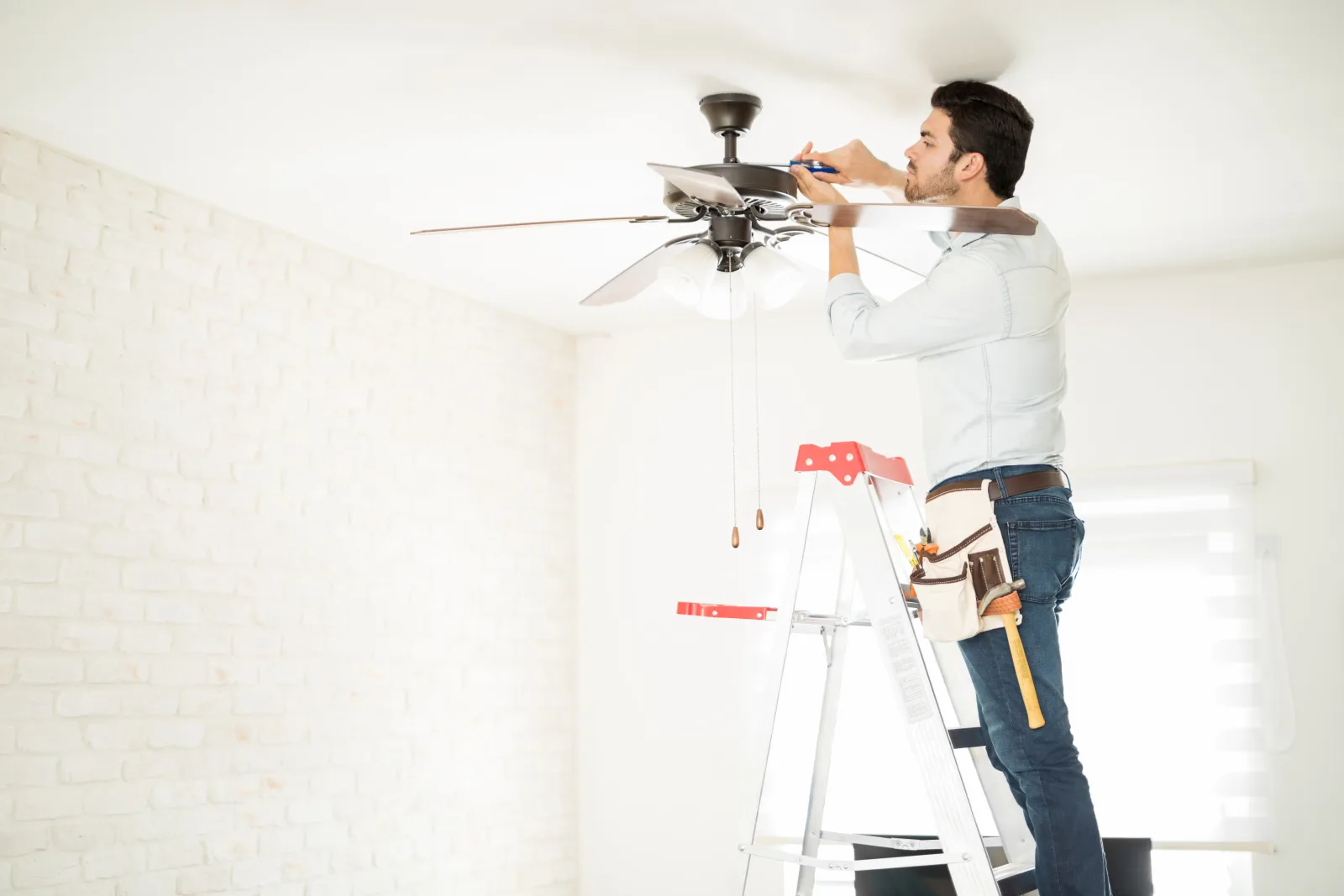
Why a Wobbling or Dead Fan Is Worth Fixing Fast
A ceiling fan that wobbles, hums, or has stopped working outright is more than an annoyance in a Phoenix home — fans do real work here, moving air so your AC can hold a comfortable temperature without running nonstop, and a fan that's not pulling its weight quietly pushes your cooling bill higher every month it goes unfixed.
A bad wobble is also a safety issue, not just a nuisance sound — loose mounting hardware left alone can work itself further loose over time, especially in older homes where the fan may still be hanging on a box that was never rated for it.
ShowUp Promise matches you with a vetted, licensed, insured, background-checked electrician who diagnoses the actual cause — capacitor, motor, mounting, or wiring — and fixes it right, backed by the ShowUp Guarantee: if they don't show up when promised, you don't pay.
Common Ceiling Fan Problems We Fix
Most ceiling fan calls fall into a short list of familiar issues, and nearly all of them are fixed in a single visit:
- Wobbling blades — usually a balance issue, a loose mount, or years of dust buildup on one side
- Humming or buzzing — often a failing capacitor or a motor bearing starting to wear
- Fan won't turn on at all — a tripped breaker, dead capacitor, or burned-out motor winding
- Only runs on one speed, usually high — the classic sign of a capacitor going bad
- Remote or wall control not responding — a receiver, dip-switch mismatch, or dead batteries
- Light kit not working while the fan still spins — a separate wiring or switch issue
Why Ceiling Fan Repair Matters More in Phoenix Heat
Set to spin counterclockwise in summer, a working ceiling fan pushes cool air straight down, which lets most Phoenix homeowners bump the thermostat up a few degrees without losing comfort — a broken fan means the AC alone is carrying that entire load, month after month.
Phoenix heat is also hard on the fan itself — attic temperatures near South Mountain, Laveen, and Ahwatukee can climb well past 130°F, and that heat wears out capacitors and motor bearings faster than a milder climate would, which is why capacitor failure is one of the most common repairs we see here.
Any repair that needs new wire pulled through the attic gets scheduled for early morning, before the day's heat has had time to bake the roof deck, so your electrician isn't working in dangerous conditions overhead.
Repair or Replace? What Determines the Call
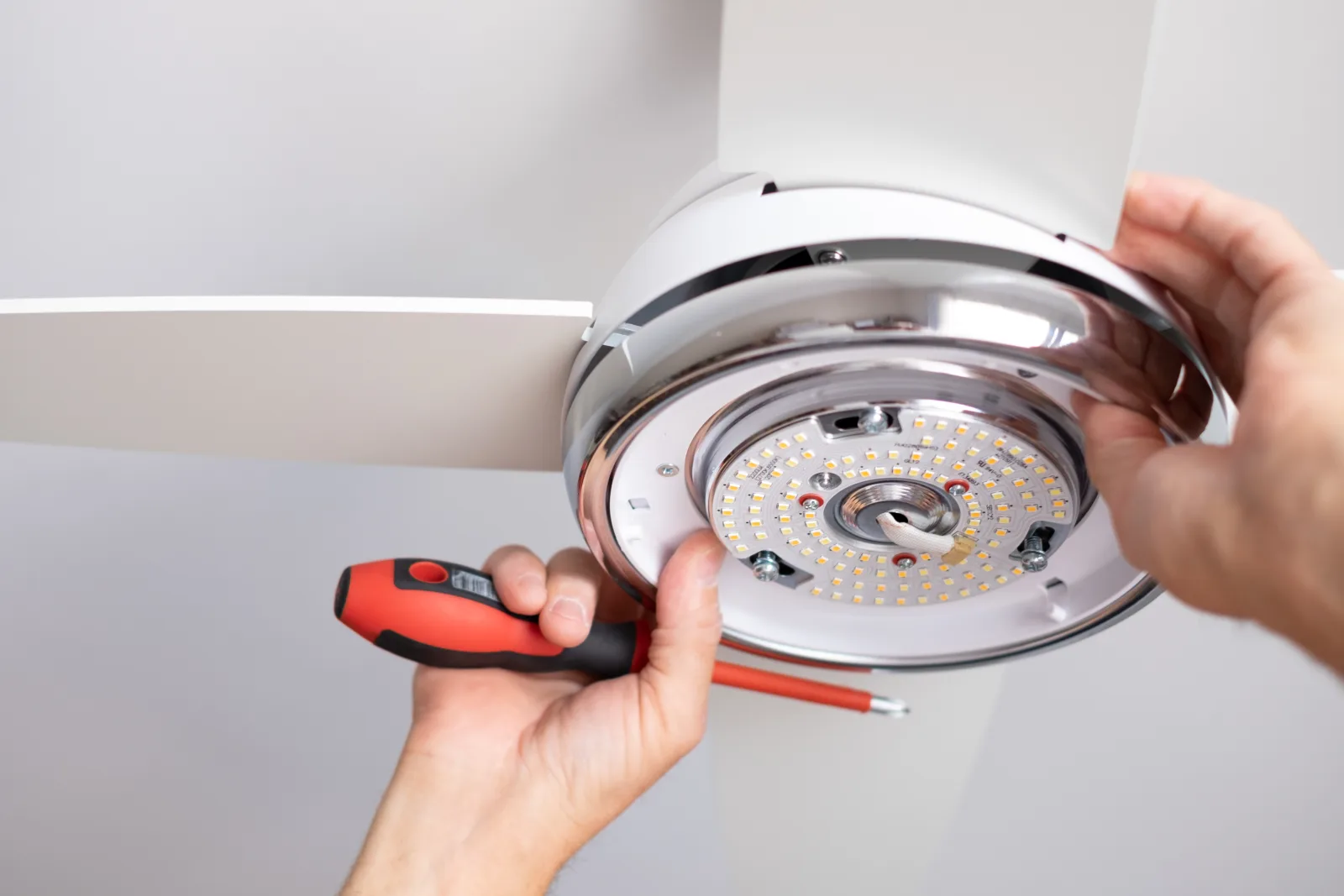
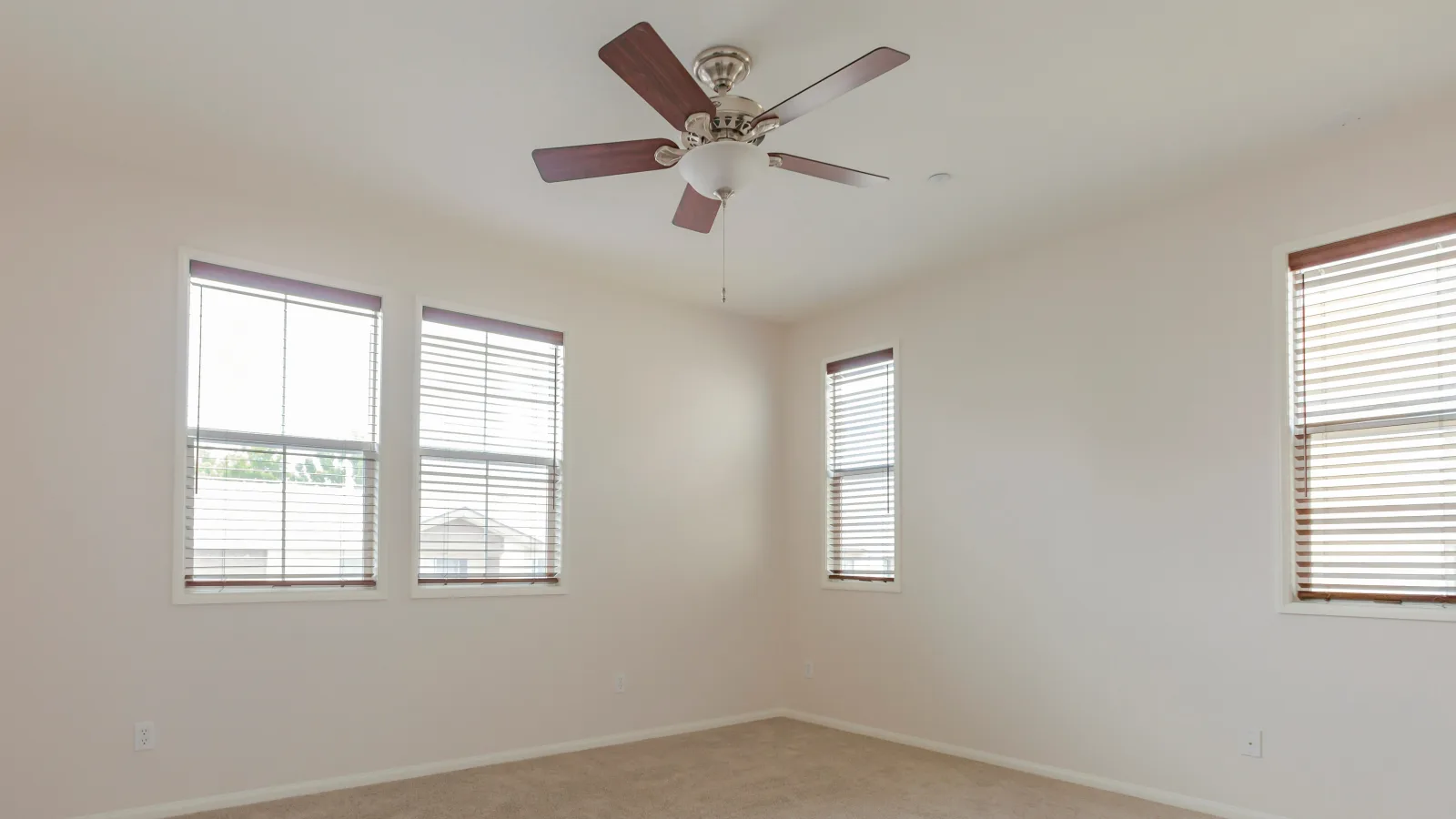
If the fan is under about 10 years old and the problem is electrical — a capacitor, a remote receiver, a switch, or the wiring — repair is almost always the right call and costs a fraction of a full replacement.
Replacement makes more sense when the motor itself has burned out, the blades have cracked or warped badly enough that rebalancing won't hold, or the fan is old enough that matching parts are hard to find. Your electrician gives you a straight answer on which bucket your fan falls into before recommending either path — never an upsell by default.
Either way, the mounting box gets checked first — a fan hung on a light-only box needs to be upgraded to a fan-rated box before a new fan goes up, since that box is what keeps it from working loose under constant rotation.
Fan-Rated Boxes and Permits in Phoenix
Repairing a fan on its existing, already fan-rated box generally doesn't require a City of Phoenix residential permit. Installing a new fan where only a light fixture existed before — meaning a new fan-rated box and new wiring — typically does.
Your ShowUp Promise electrician can tell you which category your job falls into and pull any required permit as part of the work. If your property sits outside Phoenix city limits — Scottsdale, Tempe, Mesa, Chandler, Gilbert, or Glendale — each city runs its own building department with its own rules.
Skipping a required upgrade on the mounting box isn't just a paperwork issue — it's the single most common reason a ceiling fan eventually comes loose from the ceiling, which is why every ShowUp Promise electrician checks the box before hanging any new fan.
What Ceiling Fan Repair Costs in Phoenix
A simple fix — a capacitor swap, remote receiver replacement, or blade balancing — typically runs $75 to $175. Motor repair or replacement on an otherwise good fan usually falls between $150 and $275.
A full fan replacement, installed on an already fan-rated box, commonly totals $150 to $300 including the new fixture. Add a fan-rated box upgrade or new attic wiring and the job typically runs another $150 to $250 on top of that, with an itemized, upfront price before any work starts.
Serving Phoenix and the Whole Valley
ShowUp Promise matches homeowners with electricians across Phoenix and the wider Valley, including Arcadia, North Central Phoenix, Laveen, Ahwatukee, Desert Ridge, Scottsdale, Tempe, Mesa, Chandler, and Gilbert. Wherever your fan is acting up, there's likely a vetted pro nearby ready to fix it.
Need an emergency electrician right away, or other electrical work alongside your fan repair? Our network also handles light fixture repair, recessed lighting installation, electrical panel replacement, GFCI outlet installation, surge protector installation, smoke detector repair, a licensed electrical contractor, general electric service, Level 2 EV charger installation, and RV generator repair. You can also browse all of our trusted contractors in Phoenix in one place.
The ShowUp Guarantee
Every electrician in the ShowUp Promise network is vetted, licensed, insured, and background-checked before they ever reach your property. You approve the price before work starts, and if a pro doesn't show, you don't pay — the system reassigns your job to the next available verified pro instead.
A properly working, correctly directed ceiling fan genuinely lowers cooling costs — the U.S. Department of Energy's ENERGY STAR ceiling fan guidance notes that a fan lets most households raise the thermostat several degrees with no loss of comfort, which is one more reason a wobbling or dead fan is worth repairing quickly rather than living with it through a Phoenix summer.
Ceiling Fan Repair Phoenix FAQ
How Much Does Ceiling Fan Repair Cost in Phoenix?
Why Is My Ceiling Fan Wobbling, and Can It Be Fixed?
Why Won't My Ceiling Fan Turn On, or Why Does It Only Run on One Speed?
Does My Ceiling Fan Need a Fan-Rated Electrical Box?
Should I Repair My Ceiling Fan or Replace It?
How Long Does Ceiling Fan Repair Take in Phoenix?
Get Your Phoenix Ceiling Fan Fixed Right
Tell us what your fan is doing, then match with a vetted, licensed, insured Phoenix electrician who diagnoses it, fixes it right, and shows up when they say they will.